Showing posts with label psychology. Show all posts

Thursday, August 22, 2013

Outlawing goals for therapy is a Pandora's Box

New Jersey Gov. Chris Christie
I was astonished to see that New Jersey governor Chris Christie actually signed into law a bill banning therapy to change minors' orientations away from homosexuality.  If he'd done nothing, the bill would have become law anyway. But he chose to step forward and sign.

I'm just surprised he did it. Not because he risked his Republican cred by jumping headlong onto the side of gay supporters--in what some think is preparation for a presidential bid.

I'm perplexed, but not even because Christie inserted the State in parents' decisions to work with their own children on a delicate issue in their own ways. The law now makes New Jersey an adversary against traditional, religious families whose biblically-based beliefs inform their childrearing decisions.

I'm flummoxed at his signing, but not because Gov. Christie sides with the American Psychiatric Association, which condemns conversion therapy by citing frightening and extreme tactics used, we're told, "in some cases." I don't know what goes on in sessions addressing minors' sexual preferences, so I won't comment on what is also called "reparative therapy." But I do wonder if it's appropriate to peg a child's sexual orientation before that child can legally comment or consent.

No, the thing that shocks me is the audacity of New Jersey to interfere in the content of any therapy. If conversion therapy does produce in some participants negative consequences, shouldn't state licensing boards and professional groups step in? And if crimes occurred, shouldn't courts decide the evidence in individual cases?

As a therapist, I've seen plenty of discomfort on the part of clients as they confront and work through difficult issues, so I'm astounded that a state can pick one client goal and rule it forbidden for everybody at all times. It seems bizarre that a government can start rooting around the confidential relationship of therapist and client should that client desire a particular outcome that affects only himself.

I can understand that every state seeks to protect its citizens from fraud. And many gay advocates hold that changing one's sexual orientation is fraudulent--that one cannot change, even if he sincerely desires it.

Chirlane McCray de Blasio, the wife of New York mayoral frontrunner Bill de Blasio, wrote an
Chirlane McCray with husband Bill de Blasio
article
in Essence Magazine in 1979 proclaiming, "I am a Lesbian." She was "out, loud and proud," according to the magazine. Now, 34 years later, she's been happily married for 19 years to the candidate, with two teenaged children, living, as she described in a May Essence update, in a "traditional marriage."

When she "came out" at age 17, she told Essence, she hadn't really dated any men, but later was attracted to them. Asked if she is bisexual, the articulate McCray responded, "I am more than just a label. Why are people so driven to labeling where we fall on the sexual spectrum? Labels put people in boxes, and those boxes are shaped like coffins."

I agree with McCray that there's a wide spectrum of sexual attraction and response, and I respect that she changed her orientation and her own label of herself from "lesbian" to "conventionally married."  But the professional psychology associations are against voluntarily changing one's orientation. I wonder what they think of Ms. McCray?

Why would Gov. Christie sign a bill that outlaws therapy to assist clients who, like Ms. McCray, choose to move to another point along the sexual spectrum?

If New Jersey can ban one type of change efforts because they're "unlikely to be successful and have some risk for harm," disgruntled clients may bring the same standard to bear on just about every form of therapy. After all, even mainstream modalities often produce negative reactions, even under the most gentle and professional of circumstances. And when the likelihood of a client achieving a goal is slim, should therapists be banned from aiding someone who still wants to pursue it?

After I authored a bestselling book describing the harms of divorce, many readers sought me out with the goal of saving their marriages. Often, their spouses were emotionally long gone, sometimes enmeshed in other relationships or new pursuits, and a remaining spouse faced devastated children, a reduced standard of living and extreme hurt.

Sometimes such couples approached me together, even though the agenda for one partner was to repair the marriage while the other was there out of guilt or to placate a pleading mate. Should I have turned away these people in their emotional pain and life transition? After all, at that point marital therapy "is unlikely to be successful and contains some risk for harm." That's the basis for outlawing conversion therapy, according to the American Psychological Association; why not apply the same standard to poor-prognosis marriage counseling?

Obese people frequently receive psychological counseling (along with diets or other program components) with the goal of reducing their weight. The recidivism rate for people who lose weight is extremely high (90-95% regain, according to a 1997 study in the New England Journal of Medicine); failure to lose or maintain lost weight can lead to anxiety, depression and even life-threatening eating disorders. Oh wait, these results would qualify weight-reduction counseling for elimination by law.

The kinds of sticky issues that arise once a state chooses one type of psychological therapy to target just keep multiplying. We're talking about clients' most personal, intimate issues, in a context protected by confidentiality and by federal laws guarding privacy. Just imagine how the client and his therapist would feel knowing they may not stray into forbidden topics like certainty about one's sexual attractions. Imagine the intrusion and taxpayer funds necessary to investigate whether someone's desired outcomes for their sessions are lawful.

States aren't protecting anyone by censoring aims of voluntary patient-doctor efforts. One could reply that the anti-conversion therapy bill that Gov. Christie signed pertains only to therapy for those under 18--but then why not censor other potentially wrenching goals of youngsters' therapy? The dangerous issue here is the state's deciding the content of therapy it will approve or disallow.

Psychology is an idiosyncratic pursuit. The fit between therapist and client may shift, or it may never work. The course of therapy may be re-adjusted as progress is made or new issues arise. Professional psychiatric organizations change their definitions, and modalities go in and out of style. The reputation right now of reparative or conversion therapy is mud. I remember when electroconvulsive therapy was vilified in the films "Snake Pit,"  "One Flew Over the Cuckoo's Nest," "Francis" and many others, yet now it's receiving new respect as a treatment for severe depression. We don't need laws prohibiting out-of-favor methods any more than we need them promoting modalities currently in vogue.

Clients dissatisfied with their therapies should have redress, and every session should contain respect and understanding for participants' backgrounds and beliefs. With that in mind, licensing boards, professional organizations and in some cases the courts are available to ameliorate specific conflicts. Legislating the types of therapy that may or may not occur is just stepping too far into the interior worlds of people already suffering and reaching out for help.

Friday, July 16, 2010

Your Internet Time-Wasters--Revealing the Inner You?

Hey, suitors who want a neat way to evaluate your potential mate! Hey sorority ladies trying to determine the best candidates during "rush"!  Hey Moms, Dads, kids who want the real scoop on family-members--here's a quick route to discovering anyone's inner soul.

Ask how he wastes time on the Internet.

In the "old days," people frittered away time talking on the phone, watching TV or reading magazines, pulp romances or sports statistics.  Nowadays, they spend hours following click-leads to sites that reflect their idiosyncratic self-indulgences.

I confess: I check out cameras. I'm looking for the camera that meets all my criteria. It hasn't been made, yet, but that doesn't keep me from searching, comparing, evaluating, reading reviews. For hours (and then hating myself for it).

My daughter loves shoes. She goes on all the online shoe sites trying to find ones she adores on sale.  She buys them, then takes them back to stores near her if they're not right.  My other daughter's passion is pets. Puppies, actually. She scours Craigslist for adorable candidates, squealing and lapsing into baby talk when a photo particularly captures her fancy.

My son checks out comedy.  College Humor is his haunt, and when he finds something hilarious or catchy, he switches to YouTube to see its prequel, sequel, take-offs, permutations and all the campy songs written about it.  (Double rainbow--it's so intense!)

Every news outlet notes that porn gets the most hits on the web.  But how often do you see stories about people addicted to...well, stereo power cords?

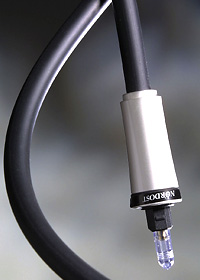
My husband, the audio-phile, spends hours comparing the virtues of various stereo inter-connects. Yes, those pieces of wire and connectors that hook together components like amplifiers, CD players and speakers.  Did you know that some of these cords and connectors can cost as much as $40,000 each? (um, which should I get, a fancy car or the two-inch-long Siltech Emperor Crown connector?)  The Nordost White Light glass fiber optic cable is a comparative bargain, at just $33,000.

My man, however, gets his jollies by chasing down the best deals on his audio equipment. He's looking for the most resonant bang (and Olufsen?) for the buck, wondering if a $300 power cord is really just a tenth as good as its $3,000 counterpart.  Recently, we got a parcel on our front porch.  Minutes later, there appeared to be a scary black snake coiled behind his amplifier, working its silent magic on Schubert.  Hubby was thrilled, and raced back to his computer for some idyllic time checking out further electronic enhancements.

As a psychologist specializing in relationships, I've always been fascinated by individuals' quirks and affections.  I'm going to have to research what internet time-wasters say about a person's mental health.  But until my definitive study, there's no harm in replacing the age-old pick-up line "What's your sign?" with "what's your site?"  And it could end up being a lot more revealing.

Tuesday, January 30, 2007

Study tries to Deny Boys will be Boys

Trying to work, getting caught up in all the reasons why I should have started earlier on my book and not procrastinated! Like bumping smack into a study that makes me crazy with AARRGGHH! A women's studies prof at U of Wisconsin, Madison--Janet Shibley Hyde by name--has gotten oodles of publicity for supposedly demonstrating her groundbreaking "Gender Similarities Hypothesis," offered to contrast with the prehistoric traditionalists who assert that the genders are actually different. Imagine that.
Feminists, the group no one wants to admit to joining anymore, are stuck defending their dying university departments, and so have to come up with something novel to prove we ladies, er women...er, wimyn are completely equal to men. Unfortunately, that means denying reality--not that women are in any way inferior to men, but that women are physically hard-wired to be different. From an evolutionary point of view--and certainly these wimyn are pro-evolution and NOT pro Intelligent Design--gender roles make efficient sense. You'd think that over millennia, the fittest survived because the baby-bearers could tend to the young, and the non-nursers could go out and use their brute strength to club some animal for food. And while the Big Guy was out, the ladies could perfect their nurturing skills and communicating skills and the guys could refine their grunting about sports.
The proud and loud feminists don't care for such roles. Because the evolutionary explanation implies that somehow there's a reason other than acculturation and discrimination for why fewer women choose mathematics as a career, and why so many decide to derail their CEO aspirations to coo to infants.
Certainly Prof. Hyde and her cohort have gone to great lengths to support the feminist thesis. They played a few statistical tricks by taking a wide range of apples, oranges, nectarines, bananas and other fruity outcomes and applying a meta-analysis to them. That means the professor didn't tease out the methods of the studies she examined, or rate their quality, or separate out potential underlying factors such as varying goals of researchers--instead she took their outcome numbers and divided results into male and female and compared them, in big hunks. When you mish-mash together piles of studies--which were already conglomerated analyses of OTHER studies--you're sure to lose significance as everything regresses to the mean in a tired heap.
So she found that the differences in outcomes were not so very large. Surprise.
And then, oh yes, an aside--despite her glomming everything together, men STILL showed themselves significantly more agressive, more sexually oriented, and physically stronger. Shockeroo.
Naturally, the American Psychological Association made a big press release titled "
MEN AND WOMEN FOUND MORE SIMILAR THAN PORTRAYED IN POPULAR MEDIA, ACCORDING TO RESEARCH ON GENDER DIFFERENCES"
Here's an excerpt of the APA press release for her Sept. 2005 article: Over-inflated claims of gender difference seen in the mass media affect men and women in work, parenting and relationships, said Hyde. Studies of gender and evaluation of leaders in the workplace show that women who go against the caring, nurturing stereotype may pay for it dearly when being hired or evaluated. This also happens with the portrayals of relationships in the media. Best-selling books and popular magazine articles assert that women and men can’t get along because they communicate too differently, said Dr. Hyde. Maybe the problem is that they give up prematurely because they believe they can’t change what they mistakenly believe is an innate trait, she added.

In other words, the research on brain structure, and the thousands of studies that do show gender differences are, oops, the CAUSE of the problem. Thank you, doctor. Now we know that women and men are interchangeable, and therefore, well, I guess same sex marriage is now unavoidable, and women who hate math should just up and take Trig. It's those durn authors of best-selling books and popular magazine articles who are holding us down, because they've had a malevolent agenda to make us "give up prematurely" in our communicating.
I see. I'm afraid her meta-analyses haven't convinced me that there are no innate differences between men and women. Certainly both genders have many similarities--both are human, both share goals, both strive to create together an integrated, harmonious life. But though men and women are in many ways similar, there's no denying their differences. Thirty years post-Gloria Steinem we've had plenty of practice being non-sexist. And somehow, girls still want dolls and boys still use their sisters' Barbies...as guns.