Sunday, February 28, 2016

Why Tech Companies Can't Keep Good Women Employees

Nathalie Miller pitches Doxa to a Venture Capitalist
My son recently got a job in development at a Tech firm, and one of the many praises he has for the company, SmartSheet, is that half of its staff are men and half women.

"That's not the usual composition in a tech company," he adds, and indeed, a story on the cover of the New York Times Business section by Claire Cain Miller bears him out, noting that "30 percent of employees at big tech companies including Google, Facebook and Apple are women..."

The question is, "Why?" The NY Times story implies why, but you'll never find the answer stated explicitly, because it's completely politically incorrect--though hardly a secret.

The reason is that women choose to divert attention to their families.

Nathalie Miller, now 34, went on the fast track to career success. Raised in Berkeley, California, she got a degree from Harvard, then moved to VietNam (she's of Vietnamese and European descent), starting a micro-finance nonprofit.

Returning to the US in 2013, she signed on as employee number 20 with Instacart, a grocery-delivery start-up, and watched it expand to 120 employees and 4,000 contractors within a year.

Then "a new employee told her that he had ranked the hottest women at the company, and she was No. 1. She reported the comment to managers, and the employee was fired the next day," reports the NY Times piece.

This brought interest in matching female candidates with pro-women high-tech openings, leading her to leave Instacart, partner with an engineer, and create Doxa, a site that would collect data on companies, give job seekers online personality tests, and facilitate hiring. She hoped to increase awareness of issues important to women by including info on companies' policies.

She built the company to "820 active users and 300 companies on a waiting list to be included," and so sought money to expand. About then she discovered that she and her husband were expecting their first child. She "plotted strategy," and planned to mention her impending parenthood only on a second meeting with potential investors, and then say "...I'm married to a man who will be a primary caregiver, and this is no different from investing in a man whose wife is pregnant."

Nathalie Miller worked diligently to hone her pitch, refining her content and look with a mentor. She met with more than 40 venture capitalists, one a Ms. Yuan of Cowboy Ventures, who said of the software, "It enables companies to be responsive: 'Let's get a maternity policy because we don't want to be up on your platform without that.'" Still, none she approached chose to fund Doxa, and when her engineer partner got greater responsibility at this day job, Ms. Miller was faced with finding a new technical expert. 

The article details issues facing women in Silicon Valley, including differences in men's and women's presentation styles, and the way women are received by male execs and co-workers. It relates the difficulties of a start-up in the competitive tech world to the problems encountered by Doxa.

 Ultimately, however, Nathalie Miller chose another worthwhile path: motherhood.

"Ms. Miller's plan was to take a month off and get back to work," explains the NY Times story. "Then...she gave birth to a girl, Zadie Mai, and changed her mind. 'I feel a mixture of intense love and protectiveness,' she said. 'I want to hang out with the baby forever. There are my real physical needs and the physical dependence of the baby, all this stuff I didn't expect to be so consuming.'

...She decided to take at least six months off, doing some work from home after three or four months," the article notes. "Her husband, meanwhile, had found a full-time job in advertising."

Yep. The setting might now be Silicon Valley, but the same switch of ambition happened to a generation before the millennials. Feminist baby boomers (like me), took advantage of new openings in a raft of fields, and yet found themselves pairing up, responding to biology and, when their babies came on the scene, falling in love. Whether it's hormones, or simply gaining the perspective that raising your own child is valuable and rewarding, women often opt out of promising careers at a certain stage. Is this really a surprise? Or a problem?

Companies may find that they can populate their tech staffs with competent, sharp women right out of college, who serve them eagerly and well for several years and then realize they've "been there, done that." These women know they've got a window of time to have children and raise families, and prefer to fully participate in that (just as they fully embraced their tech jobs) rather than take a month or even a few and then leave their babies in day care or with a nanny.


It's ironic that Nathalie Miller, whose start-up aimed to place women in responsible roles in companies sensitive to women's needs, stepped away from her own such position, lured by the sweet coos of her baby--but it's also laudable and not unusual. Silicon Valley and Seattle, where I live, are filled with growing tech companies snapping up capable college grads, but most of their hires aren't women in the mothering phase (who often carve out part-time or work-from-home alternatives), or older males or females.

I'll be interested to see the proportion of tech companies who keep their women employees throughout long careers. But I expect that many women launched in upward trajectories in these demanding enterprises will be attracted to a pause, the kind that brings a payoff far exceeding dollars and cents.

Photo credits: Top, Jason Henry for the New York Times

Wednesday, February 24, 2016

Why A Vote for Trump is a Vote for Hillary

Results from the Nevada GOP caucuses show Donald Trump with more than 45%, nearly twice the percentage vote of each of his runner-up rivals, Marco Rubio (24%) and Ted Cruz (21%).

I do not understand how anyone could entrust our nation's future to one whose vocabulary consists of superlatives and digs.

My husband is wrapping up writing a book on Providence in American history with a chapter on Abraham Lincoln. Trump and Lincoln--polar opposites in their characters and their perspectives of the presidency. I only wish we could produce a Lincoln-esque candidate with the humility to deferentially serve God and the United States people, driven and able to absorb the intricacies of history, international relations and domestic policy.

Instead,GOP front-runner Donald Trump has demonstrated expertise in braggadocio. He exclaims in speeches that he did very well in school, is rich, very rich, and plans to use The Art of the Deal as his presidential guidebook. He emblazons his name in two-story letters on skyscrapers. He blithely insults women, Mexicans and his fellow candidates.

 Jimmy Kimmel capsulized the Trump approach in a Dr. Seuss book parody that he read on-air to the approving real Donald.


Most voters share my incredulity with this Trump phenomenon. A January Gallup poll found 60% of Americans view Donald Trump unfavorably. (The same poll found 52% viewed Hillary unfavorably.) Who are these people supporting Trump? How come I've never met any?

But it's numbers that explain why a vote for Trump is a vote for Hillary: Even with her 52% unfavorable rating, Mrs. Clinton is amassing enough delegate votes to win the Democratic nomination. People who like Bernie just haven't come through in the primaries and caucuses--at the moment Hillary's sewn up 503 delegates, while Bernie earned a paltry 70. Apparently promising free stuff--like free college tuition, free preschool, and free medical care--isn't bringing in the delegates.

So, as Hillary's totals rise, Bernie's support weakens, and we can assume she'll be the Democratic nominee, just as everyone always said.

If Republicans divide on the other candidates and propel The Donald to nomination, his negatives "trump" Hillary's. More people are offended by Donald's racist-sounding anti-immigrant rants and his rudeness to Meghan Kelly than love his unplanned bursts of feeling and optimism. So, if he's the Republican nominee, the party shrivels as members defect and Independents cast their votes for the more predictable, and therefore least dangerous of the two offerings.

It's great fun to watch debates where the frowning Comb-over King lets loose his assurances we'll be the best country and fix everything. But when it comes down to our safety and the delicate diplomacy needed in this fragile world, it's clear Americans just don't want an apprentice.

Monday, February 1, 2016

"Inequality" has nothing to do with divorce. But personal behavior does.

Sen. Rubio: Marriage is a route out of poverty
So, I'm writing a book on divorce. Actually, it's on why you should NOT divorce. Therefore I collect articles on the subject, and one I was just filing was from last week's New York Times, titled "Marriage, Poverty and the Political Divide."

The piece suggests that economic inequality works against marriage. It discounts Sen. Marco Rubio's assertion that marriage can lift parents and children from poverty.

But it doesn't get to the point--that the values of marriage shrink poverty rates, and it takes personal behavioral choices, not scrapping "inequality" with legal and policy change, to both support marriage and curb poverty. 

Sen. Rubio bases this pro-marriage remark on a Heritage Foundation report showing that 71% of families in poverty are headed by unmarried individuals. Of those who are not poor, 73% are headed by married couples. Married people are better off financially.

Makes sense. Certainly a couple pulling together can bring in more income than a single parent, and make what they have go further. Stay-at-home parents contribute by saving on day care and providing other services that make the family function.

One would hope that an absent parent would contribute to his child's support. The trouble is, among the poor, this is infrequently the case. In 2011, only half of all custodial parents had a child support agreement. Those with child support agreements actually received only 62% of what they were due. Of all custodial parents receiving child support, 24% were in poverty. Thirty percent of custodial mothers live below the poverty line.

So how does inequality shape a couple's future together?  How does the fact someone else earns a lot more than you do harm your marriage? Not clear. 

Writer Andrew L. Yarrow's article claims "Poorer Americans already aspire to marriage at similar or higher rates than their higher-income counterparts, according to a 2012 UCLA study. But when they do marry, their marriages are much more likely to end in divorce."

The piece neglects to mention that divorce not only correlates with poverty but also with education of the partners. The more education partners have, the more likely a couple will stay together, finds the Heritage Foundation.

And of course education is highly correlated with income. In other words, those with the tenacity and ability to make it through college or advanced degrees more often have the tenacity and ability to both earn more money and form an enduring marriage. 


This isn't sinister "inequality,"a societal ill to be corrected by policy-makers. This is simple variation among individuals. Certain personal abilities, values and behaviors promote certain outcomes. It's less a governmental problem than a personal problem, a values and behavioral problem. Individuals who exhibit characteristics that promote happy marriage can much more often sustain happy marriages.

The term "inequality" implies that something's askew, that everyone would have the same positive outcomes were it not for unfairness. Look at how the poor scramble to survive, while the rich buy $5,000 designer purses! If you believe that all individuals begin with the same potential, it follows that only factors imposed by luck or malice stand in anyone's way. And therefore laws and policies should remove those barriers. But if you look around, you notice that humans were not created with the same potentials, though we rightly offer everyone the same opportunities to maximize the potentials they have.

"Marriage is far from the magic bullet to end poverty that some conservatives claim," says Melissa Boteach of the Center for American Progress in the Times piece.

Nobody says it's magic, but being in a marriage is one of those opportunities that allows us to maximize our best selves. Says W. Bradford Wilcox of the National Marriage Project,"Americans are more likely to realize the American dream if they get and stay married, and grow up in communities where marriage is stronger. Marriage fosters saving, facilitates economies of scale and encourages stability and family life, all things that are good for the average American's pocketbook."

In other words, the same values that support marriage support financial success. So it seems Sen. Rubio is right--a shortcut out of poverty could be living the commitment and values marriage requires. 

Tuesday, January 26, 2016

Decluttering: Life-Changing Magic for homes and the Presidential Race


Donald Trump sparks joy
Yes, I'm one of the millions who read every word of Marie Kondo's "method" for home decluttering, The Life-Changing Magic of Tidying Up. Tidy is one thing; pitching everything that doesn't send a thrill up your leg--her tack--is quite another.

Ms. Kondo hails from Japan, a place where tiny homes are measured by the size of sleeping mats. She offers an anecdote about a client who lives in a 7-mat apartment. Not much room to keep stuff.

To use her method, you'd gather categories of possessions together, and handle each item in the pile to discover if it "sparks joy." I have breakfronts and closets filled with items that spark joy.

    When Ms. Kondo suggests that readers rid themselves of treasured souvenirs and mementos, the difference in our cultures becomes apparent. You'd think that in a land of ancestor-worship (Ms. Kondo notes she volunteered at a Shinto shrine), people would be sentimental about objects connecting them to the past. No; throw away the notes from your college class, playbills, ticket stubs and old photos.

 Ruthlessly purge your closet for clothes seldom-worn or less-than-optimally flattering--roomy Saturday pants and comfy sleep-shirts included. And when you've proudly filled bags and bags of items to discard (she calls them "garbage" though you're supposed to thank each for its service before dumping), you're to fold what's left in origami squares, standing your shirts, socks and pants on end in rows in your drawers.

That this has brought the 31-year-old author millions of fans, surprises me. That she's followed it up with another book does not. In New York last week on promotion, she earned a New York Times story that noted the KonMari Method has sparked a backlash, including a book called "The Life-Changing Magic of Not Giving a (expletive)."

Ms. Kondo's new book, called Spark Joy, offers detailed diagrams for clothes-folding. Given that her quick-read first book explains her entire home-order program, this second volume merely elaborates.

However, there are grander lessons to learn here.

Marie Kondo signs her new book, in New York Times photo
The untidy field of presidential candidates needs some winnowing. The trouble is that Donald Trump sparks joy. He's the candidate people had in their living rooms saying "You're fired!", and holds the huuuge name blaring from the tops of conspicuous, fancy buildings.  Part of his hair is orange; the part that falls into his face. The rest is a shade of platinum blond, a combination that grabs viewers' eyes in perpetual query. His permanent frown and bugle lips make people smile.

The fact Donald Trump is unrehearsed, unfettered and unbothered by his lack of deep understanding of world issues adds to his appeal. He sparks joy in audacity; some of his earlier sexist and racist comments (ask Megyn Kelley) were such shockers that fans just can't wait for his next offenses--all of which are eagerly excused.

On the Democratic side, Bernie Sanders sparks joy. He promises to provide for everyone from college students who get free tuition to construction workers earning some of the $1 trillion over 5 years he'd pay for roads and bridges  He sparks joy by offering free universal preschool and child care, $5.5 billion for a youth jobs program, mandating employers give twelve weeks' paid family and medical leave, government health care for all, and a $15 minimum wage by 2020.

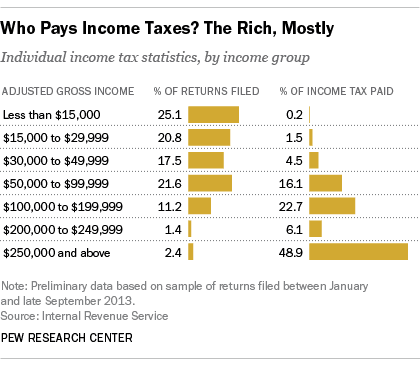
 Joy! Joy! The 1% have plenty of wealth to cover it all; Bernie thinks they ought to pay their fair share. Right now, the top one percent--who are, after all, one percent of US taxpayers--pay nearly HALF the taxes collected (according to the non-partisan Tax Policy Center, reported by CNBC). Why not make them pay a lot more to help so many? They have more than they need.

Sparking joy is the criterion far too many Americans seem to embrace. But as primaries and party conventions approach, our political scene needs some decluttering. Using more serious criteria than for ditching tchotchkes.

How about sparking national security? Didn't the terrorism in San Bernardino get anyone's attention? Illegal immigration was not the issue when Syed Rizwan Farook and Tashfeen Malik fired 150 rounds from five guns into a holiday party, killing 14 and wounding 22. Lucky their three wired pipe bombs didn't detonate.

Why isn't national security the primary issue? What good is a $15 minimum wage when shopping malls are deserted due to fear of "soft target" attacks? 

 Republicans seem transfixed by a racist-sounding threat from Hispanics dashing across the US border. Do you really think our most concerning danger is from Mexicans Trump wants to stop with a huuuuge wall? Truth is, of the 11 million estimated illegal immigrants in the US, 5.6 million are from Mexico, a drop from the 6.7 million here in 2007, when no wall was constructed. What reduced the number of illegals? Fewer economic opportunities
Bernie Sanders, sparking joy for all but the 1%
during our recession, and more serious enforcement of present laws.


We need candidate tidying-up based on focus on security, and mastery of the complicated intricacies of world politics. North Koreans test hydrogen bombs, as the murderous megalomaniac Vladimir Putin continues oppressing anyone in his imperialistic way. ISIS expands its territory in Iraq, Syria and Libya. Boco Haram, Al Qaeda and al Nusra bring parallel threats, all separate fires to extinguish. Expertise in international security should be the foremost qualification of our next president. If we're contending with encroaching terrorism, domestic pleasantries--free pre-school and college education, more family leave time--mean relatively little.

Let's clean up the presidential race and toss the candidates that spark joy in favor of those who can destroy terrorist and repressive threats. Our safety must be the first priority, and preserving the strength of our economy the second. It's not a time to replace capitalism with socialism but to bust barriers to earning more. We don't need candidates with legal and ethical problems. We don't need a wall to protect us from Mexicans--but we do need strong efforts to keep terrorists from our midst. It's great to live in an orderly 7-mat home, but most important to put our fundamental priorities for security in order.

Wednesday, November 4, 2015

Fancy Mogadishu Hotel is like the setting for a novel--but Reality is more Gripping and Horrifying

The Sahafi Hotel, before the attack

"If there is one hotel everyone knows in Mogadishu, it is the Sahafi. Warlords and militants alike used to hang out and plot schemes in the lounge and courtyard while sipping grapefruit juice and pulling apart camel meat steaks."

"...the hotel's owner, Abdirashid Ilgayte, used to welcome guests into his incense-scented office just off the hotel's entrance and regale them with stories of violence and intrigue from Somalia's darkest days..."

Sounds like the beginning of a spy novel. You can almost inhale those succulent camel meat steaks pulling tenderly from the bone...

But instead of the enticing opening to a juicy intrigue, this is a NY Times news story, dated November 2, reporting the latest bloody attack by "one of Al Queda's most murderous offshoots," the Shabab, who rammed an exploding car through the hotel's front gate to allow entry to a cluster of terrorists who shot everyone in their path, then roamed the floors looking for more to kill. The murderers held the charred, rubble-filled hotel for hours; a second car explosion in front two hours after the first wounding or killing several more people, many of whom had come as reporters to the scene.

The original rampage occurred at dawn; "By 11 am, African Union troops in Somalia, along with government forces, overpowered the attackers and shot them dead."


The Sahafi Hotel, under siege
This is just the latest in a series of hotel attacks the Times calls "one of the hallmarks of the Shabab, who have killed scores in Mogadishu in recent years by overwhelming security guards at the gates and then sending in suicidal fighters." The article, by Mohammed Ibrahim and Jeffrey Gettleman, notes, "most of their victims have been fellow Somali Muslims."

We in America listen to the World Series and plan our Sunday outings, while the rest of the world endures a reality we cannot fathom.

"Mogadishu may be safer than it used to be but it is still not safe," the news article continues. "The Shabab once controlled much of the city, bull-whipping women and terrorizing the population by enforcing a harsh version  of Islamic law." The writers observe that the Shabab "seemed to have perfected mass murder on the cheap, including an attack on a university in Kenya in April in which four young Shabab gunmen killed more than 140 people." On the cheap!?

Did you read this article? Are you as appalled and horrified as I am that this kind of ruthless extermination is almost reported ho-hum--just another instance of ubiquitous violence and murder to further an extremist vision of Islam aimed at the entire world? What are the churches and universities supporting BDS (boycot, divestment and sanctions) against Israel doing to combat this much more lethal and festering Islamism?  Then again, it's easy to protest a democracy; not so simple to cut down terrorist extremists whose suicidal tactics prove their complete disregard for life.

I can pray; I can write blogs pointing out these atrocities. These actions seem lame given the enormity of the enemy and the virulent expansion of this deadly power. Then our privileged life happens and we toss the day's newspaper into the recycle bin. 

Monday, October 19, 2015

"Steve Jobs" Movie and the Democratic Folly to Tax the Rich


Steve Fassbender (left) plays Steve Jobs (right)
This week I saw the new film "Steve Jobs," a bioptic starring Michael Fassbender in the title role, and Kate Winslet as his loyal conscience, er, assistant, Joanna Hoffman. My film-critic husband gave it three out of four stars, a rating with which I'd agree.

But just as important as its cinematic quality is what it suggests about the Democrats' incessant bashing of "the wealthy."

Steve Jobs' character is so narcissistic, so sure he's right and will change the course of the world, he flattens those around him in his tire-treads. His assistant tries to assert herself, but consistently bends to his dictates. His daughter reaches out for his affection-- with even a desperate hug-- and receives only icicles. His friend Steve Wozniak, the tech wizard behind Apple's operating systems, relentlessly begs recognition for his co-workers' efforts, but Jobs, relishing his God-like power, spurns him.

The film is populated by the new "one-percent." There's a whole Silicon Valley, and several other cities nationally, filled with start-up millionaires, website successes, and app-Princes. They're young, they work incessantly, and they make big money for it. Additionally, they want to keep that money.

Bernie Sanders & Hillary Clinton want the wealthy's "fair share."

Hillary Clinton, in her opening speech at the Democratic debate, spoke of being "the grand-daughter of a factory worker" who seeks to "even the odds." "Right now, the wealthy pay too little and the middle class pays too much," she asserted, "So I have specific recommendations about how we’re going to close those loopholes, make it clear that the wealthy will have to pay their fair share..."

One wonders if all those website, app and start-up developers agree they're not "paying their fair share." These young entrepreneurs are mostly products of elite universities (or dropouts from them) where liberal,er, progressive politics are assumed and promulgated as fact and truth. And yet they want the prize for their labors. They're an important voter group that by their age should support Democrats, but by their accomplishments and self-interest may not. 

This June, Verdant Labs came out with a ranking of professions by party affiliation. No surprise: In academia you'll find nine Democrats per solitary Republican. In Internet technology, the Democrat to Republican ratio is 3 to 1. In a post-2012 election analysis, Nate Silver in the NY Times showed how the Silicon Valley is growing ever more blue. 

But will that turn around when Democratic candidates demand successful techies pay much more to the government? After all, using standard assumptions in the State of California, someone earning $250,000 this year forfeits nearly $100,000 of it to mandatory taxes and deductions. Bernie Sanders says tax on the wealthy should be "a damned lot higher than it is now," and approvingly cited rates of 91% under President Dwight Eisenhower. Will that sound appealing to millennials amassing their fortunes?

Here's an excerpt from Sanders' interview this May with John Harwood of CNBC:

Harwood: When you think about 90 percent, you don’t think that’s obviously too high?

Sanders: No. That’s not 90 percent of your income, you know? That’s the marginal. I’m sure you have some really right-wing nut types, but I’m not sure that every very wealthy person feels that it’s the worst thing in the world for them to pay more in taxes, to be honest with you. I think you’ve got a lot of millionaires saying, “You know what? I’ve made a whole lot of money. I don’t want to see kids go hungry in America. Yeah, I’ll pay my fair share.”

Bernie Sanders wants to tax rich at a "damn lot higher rate."
Nobody wants to see kids go hungry in America. That's why this year 46,674,000 people receive Supplementary Nutrition Assistance Program funds from the government.

I'm eager to discover how this generation of tech successes places its divided loyalties in the upcoming election. Will they cleave to their political histories and support Democrats, or will they guard their wealth and quietly move toward Republicans?

It's my guess that Hillary and Bernie's cries of "tax the rich!" will turn well-to-do techies decidedly fiscally conservative (even as they remain socially liberal), driving this growing constituency right into the moderate Republican camp.

Steve Jobs' politics weren't covered in the movie, though it's said he supported Barack Obama. In the film, though, he uses his wealth to wield power over his ex-girlfriend, the mother of his daughter. I can't imagine work-obsessed tech millennials willingly parting with most of the fruits of their labors (and giving up the power that comes with it) to solve "inequality" for the masses. No, Bernie, you won't find many techies saying "You know what? I've made a whole lot of money...and want to give it to the government." Whomever gets the nomination will learn that fairly quickly, I'm sure.

Sunday, October 11, 2015

Pop-Tarts and Junk Food: Parents Can't Stand that the School sells 'em

Pop-Tarts, aka "bad choice."


On a town-wide internet forum called Next Door, a polite but passionate battle brewed this last week sparked by a mom who posted her disdain that our local middle school sells 'junk' like Pop-Tarts. The neighborhood fairly crackled with responses.

The appalled anti-sweets mom began the volley with, "Yes, I'm that mom that brings oranges as a snack instead of cupcakes. BORING, MOM! Well, I'm sorry but to me it's not a popularity contest, it's about our kids health."

She doesn't even approve of juice, dinging the Izze drink that one responder noted is only juice plus 10% water. The complainant, however, feels "Sugar is sugar. If you want some orange juice, eat an orange. It's not as good for you without the rest of the fruit."

Then a registered dietitian with a doctorate in human nutrition replied that no food is inherently bad when integrated into a well-balanced diet, and consumed in moderation. She noted that yes, obesity has complicated causes, including genetics, exercise, other behaviors as well as diet--but it's not a problem in our own highly-educated community.

She continued that many factors enter into a school's decision of what to offer, including cost and convenience. Of Pop-Tarts she says, "if you read the ingredients you'll see stuff that is good for us and stuff that the popular press has vilified without sufficient scientific evidence to support that vilification."

But many well-meaning parents seem to have a visceral hatred for sugar. Offer children
sugar, it seems, and children will take it, even when warned, educated and regulated by their folks about "good choices." It's wrong to offer kids "bad choices" because kids won't listen to the warning, educating and regulating they hear.

The debate got so heated a fed-up reader rather crassly asked, "Are we now bitching about chocolate milk? I've decided to cut off my cable TV, because who needs 'The Real Housewives of Beverly Hills' when I've got the real housewives here?"


In this lovely town where I am fortunate to live, before dawn the sidewalks thump with the footfalls of runners in well-reviewed shoes, lighting their paths with headlamps. Bootcamp classes are full. Every park has tennis courts; clubs offer weight machines and television-topped treadmills. Kids engage in all sorts of sports--swim team, soccer, Little League, lacrosse.

So the brouhaha about Pop Tarts, with parents arguing whether it is their or the school's responsibility to insure that children consume only healthy food during the day, seems a bit misplaced. On the other hand, every parent wants his child eating a healthy diet. It's the luckier parents who seem to care the loudest.

But maybe this noisy discontent is beneficial. Certainly food choice is an important topic. Sooner or later, at least by high school, children will spend money on snacks without mom's protection. There will be Pop-Tarts. There will be junk food--to buy, avoid or ignore.

As a kid, in my family,  dinners were home-made "square meals" with meat, salad, starch. I never heard the term "unhealthy choices"--largely because convenience food was more expensive than mom-cooked food. We drank (whole) milk or water and never juice, soda or chocolate milk. The usual dessert was fruit. I'd ask, "what's for 'dez'?" and my mom replied "fruit" to my predicable groan. But that was the choice--fruit or nothing. We did not eat ice cream or cake or candy; it just wasn't there.


When I entered middle school, I was astonished to see a snack corner selling Jujubes, Sno-Caps, Good and Plenty, Hershey Bars. Things I'd only seen at movie theaters in glass cases. Did I find them irresistible? They seemed like a waste of money, of which I had very little.

In the morning break, which was called "Nutrition," you could get a hunk of bread slathered in garlic butter; fifteen cents bought a spiral cinnamon bun sticky with sugar, the size of a baseball glove. These "bad choices" never beckoned because no one labeled them, so I just didn't care.


When I got to high school, I became friends with a girl whose (overweight) parents bought "babka" at the local bakery. That was a gooey, rich confection that you could peel apart in layers of moist chocolate. This friend had soda in her refrigerator. She had potato chips in the pantry. All these were foods I'd seldom seen, much less had easily available.

Did I eat them when I was sleeping over at my friend's house? A little, but they never really attracted me. I don't like carbonation. I loved babka but the sicky-sweet of more than one piece tasted yukky.
This is chocolate babka. Incredibly yummy.


What that suggests is that each home has an eating culture that creates habits and comfort zones. All these worried parents in my town reveal a lack of confidence in their own influence as molders of their children and more importantly, as good examples.

Now, my children keep kosher and vegetarian, neither of which protects from "bad choices" or an unbalanced diet. But eating shellfish, just like munching candy during my youth, is just "not something we do."


For many years, I've taught workshops about how naturally thin people eat. It's simple: eat when you're hungry, listen to your body and get exactly what you want, enjoy it to the fullest, and stop when satisfied.

If we teach our kids to ignore their body's messages and to consider candy and soda and Pop Tarts forbidden, then we increase their allure. Obesity became a severe problem not because cheap junk food proliferated as much as the fact that people bought it, over-riding their bodies' signals. Of course, the problem of obesity is complex, but fostering a culture of honest eating--that is, an "eat to live," not "live to eat" mindset--lets individuals respond to their own bodies' needs rather than rely on some nutritionist or diet guru or finger-wagging neighbor.