I'm a bit agog right now, after reading an article in the April 21 New York Times' Sunday Review called "The Tangle of the Sexes." In it two researchers report their analysis of 13 psychological studies done by others--where they conclude that men and women don't form two different categories.
Their assertion that males and females should be judged on the same continua, as individuals, is certainly laudable; nobody wants old-time prejudice that would box women into restrictive careers or make assumptions about feelings.
But just because men and women share an emotional and even an interest spectrum doesn't mean they're not discrete in major ways. In fact, the genders differ in such basic, fundamental aspects as to render early Gloria Steinem feminism yawningly passe.
How could these researchers bash the "Men are from Mars, Women are from Venus" logic that sold John Gray millions of books (which they explicitly do in their study, in February's "Journal of Personality and Social Psychology")? How can they deny that so many physical and brain differences shape behavior?
Beats me. In fact, the two researchers, Bobbi Carothers, who completed the analysis for her doctoral thesis, now senior data analyst at Washington University in St. Louis, and Harry Reis, a psychology professor at the University of Rochester, admit that indeed the genders do exhibit some unbridgeable differences. Their penultimate paragraph in The Times describes their confirming their findings by checking typical, vastly disparate results: "Just to be safe, we repeated our analysis on several dimensions where we did expect categorical differences: physical size, athletic ability and sex-stereotyped hobbies like playing video games and scrapbooking. On these we did find evidence for categories based on sex."
Indeed. I chuckled when I looked over their journal article. The studies they chose to analyze were mainly the typical university studies using college students as subjects. I remember earning my degree at UCLA; it was required that we "volunteer" for several studies every year. How do you tease out the self-selection involved in data on those who not only made it to research-oriented universities but offer themselves up as subjects?
But, you might answer if you happened to take the time to read the journal article, Carothers and Reis just tried a new statistical approach on data that originally showed the sexes as psychologically polar. They found a way to say men and women aren't so different after all.
Beyond the fact they ignore using homogeneous populations, their study, which is
covered as a big deal, comes to a "duh" conclusion: Even though men score differently from women in most traditionally-recognized gender markers, there are plenty of men and women who respond in one or more psychological and social ways more like the other gender. The wife who takes charge of finances, the husband who enjoys childcare may be mighty feminine or masculine in the majority of their other interests and behaviors.
I reflect that showing men and women as interchangeable is essential to the ongoing effort to legalize same-sex marriage. The crux of the issue is whether men and women are uniquely joined, a "marriage of opposites," as I often call it, when they wed, or whether the institution has morphed into simply a declaration of commitment that any two people can make. If it's something special--bringing together two categories, male and female, that are compatible yet essentially different, it's worth preserving as it has always been. By shifting the definition to the joining of two-of-any-kind, America is bereft of any relationship that recognizes the reality of these basic differences.
And inherent differences between the genders are indeed reality. Ann Moir and David Jessel were the first to shock readers in 1989 with their description of brain research, Brain Sex: The Real Difference Between Men and Women. That was followed in 1997 with Deborah Blum's Sex on the Brain: The Biological Differences Between Men and Women. As the field of neuropsychology lept forward, Melissa Hines chronicled it in Brain Gender (2004), and a new stir erupted when neuropsychiatrist Louann Brizendine published The Female Brain (2006). Those are just the books I happen to have on my shelf; I'm sure you can buy many others that confirm the inescapable truth that men and women are hardwired differently, and that these differences profoundly affect attitudes, communication styles and behavior.
Of course men and women aren't all clump-able into two isolated camps, different on every measure. Of course plenty of men embrace stereotypically female interests, and ditto in reverse for women. But what's the gain in denying the plethora--the overwhelming landslide--of data that illuminate chasms that, by being recognized, allow for greater understanding and harmony? You can reorganize studies to your heart's content to show that individuals are just that, but despite society's eagerness to say homosexuality is the same as heterosexuality, and men and women are interchangeable, certain essential differences cannot be erased, and gender is discernible in every cell of each human on the planet.
"The world is so full of a number of things, I'm sure we should all be as happy as kings." --Robert Louis Stevenson.
Wednesday, May 1, 2013
Sunday, April 21, 2013
Viral "Dove Real Beauty Sketches" Ad a Manipulative Disservice
![]() |
| "Jenise" in self- & stranger-described drawings from Dove ad |
A forensic sketch artist sits behind a curtain and draws the faces of women from descriptions he hears on the other side. His first rendering comes from the subject's description of herself, and the second from the observations of someone who talked with her for a few minutes. The emotional moment when the subject compares the two sketches to realize she described herself as less-attractive than the new "friend" did is supposed to teach her to value herself more.
With 13 million views and counting, plus news articles and Facebook re-posts, Dove has a publicity hit, so I applaud its advertising success--but I have big problems with its message.
Set aside its manipulative emotionalism, too-close camerawork, weird massage-room background muzak and tedious length, and look at its goal, to elevate women's self-esteem by showing them they're more beautiful than they believe. Sounds good--but what if that goal were achieved? What if the subjects bragged like the men in this excellent parody by New Feelings Time? Stuff like:
"Everyone says my eyes sparkle and light up a room."
"I'm so lucky my nose is cute, the kind people pay big bucks to plastic surgeons for."
"My teeth are straight from orthodontia and really white because I bleach them."
"Men tell me my lips are really kissable."
What kind of woman would that be? Even if she were accurate, we'd think her a narcissist. Humility and modesty are a good thing, and portraying oneself as less attractive than you are to a stranger would be the healthy response to the situation.
![]() |
| Same guy, self- & stranger-described, from parody on male real beauty |
Of course, the male parody's guys are more boastful than 95% of men would be. Men, like their female counterparts, would likely downplay their good features. And a large swath of men don't evaluate their faces much at all, other than what they need to know to avoid slicing off their noses when they shave.
An article about the campaign in the New York Times says the Unilever-owned Dove based the concept on its research showing only 4% of women consider themselves beautiful. They say they want to "create a world where beauty is a source of confidence and not anxiety." Sounds laudable, but how about a world where values and achievements are a source of confidence, and beauty isn't the first and foremost means by which women are judged?
What about the useful maxim, "beauty is only skin-deep?" Kindness, now that's something to promote as a source of well-being.
The problem is that everybody's getting older, and sooner or later, everyone gets ugly. That is, if you judge the person on her externals. Admittedly, I'm as vain and caught up in our society's responses to physicality as most women are. But creams and even Dove soap are less able to freshen my appearance as the years mount. Will I be "more beautiful than I think" at age 80, as the tag line of the ad suggests? Women judged beautiful at 80 are no longer held to the standard of smooth skin, lithe muscles or model-esque features. The wise ones step back and see their lives in the context of those they touched and their accomplishments. Most of us step back and still feel inside like we're the same children we always were, insecure and striving to please.
But our looks are just part of a much larger picture of self-esteem. Ask all the actresses and models, whose desperation to compete in a hopelessly perfect realm drives them to plastic surgery, eating disorders and psychological frenzy. "Who is wealthy?" asks a famous Jewish traditional source. The query might as well be, "who is a beautiful woman?" because the same answer applies to both questions: "She who rejoices in her portion." In other words, the woman counting her blessings, grateful that she's alive--or, after the heartbreaking events in Boston--grateful that she has two legs upon which to walk has the wealth of a beautiful world, whether or not her face meets some societal standard.
I wonder how the sketches would have turned out had the women been told what was happening. "We're going to draw a sketch based on your description of yourself, which you'll compare with one based on a new acquaintance's description." The women were sketched by a police artist, after all, someone whose work is usually a composite of witnesses' recollections with the caption, "wanted for bank robbery."
![]() |
| "Maria" drawn from self and stranger descriptions in the Dove ad |
Are women often too hard on themselves? Do they frequently fret needlessly over details of their looks? Of course. Do they need to hear that their outward appearances are perceived by somebody they barely know as better than they verbalize? Don't think so.
Now isn't the time to foster narcissism. We've got Facebook, Twitter, Tumblr, Instagram and a whole app store of means to shout out how important we are. The Dove campaign platform is, after all, a website called YOU Tube. You. Or, just as often, "I." Are the iPhone, iPad, iTunes named for generosity and thinking of others? Um, no.
How about a campaign showing some selfless women? Women who care for an aging relative, or a spouse with dementia? Women who work ceaselessly at their kids' schools, or mentor a younger colleague professionally? How about some exemplary women who are obese, truly unconventional-looking, or have scarred skin? Why not apply the same tag line: "You're more beautiful than you think"--because then we could define beauty beyond skincare. Oh yeah, but it wouldn't sell nearly as much soap.
Wednesday, April 17, 2013
How to scare off a ducky duo??
![]() |
| These are not our ducks, but they could be. |
When we bought our home in the Northwest 16 years ago, we had but a single day to make a choice, due to my husband's immediate new employment. We flew up from LA and our efficient realtor showed us homes in the order they met our criteria. We ended up purchasing the first one we saw. The only drawback: it happened to have a swimming pool.
We're not swimmers, and there's absolutely no need in the Northwest to have a pool, given that there's just three months--at best--of decent weather. Our hole in the ground has caused one in our wallet. I think the expense of each dip comes to something like $500.
We really should have filled in the pool years ago, but aside from the enormous expense, we had the erroneous fantasy that when our kids became teens, the pool would be a friend-magnet. The three times each one brought guests wasn't worth the ongoing need for maintenance and repairs that our pool-dominated yard required.
One pair of lovebirds, however, has greatly enjoyed our swimming pool, despite our crying fowl: mallard ducks that arrive every March or April to make themselves at home in and next to our pool, pooping and molting where they please for two or three months.
Our usual line of defense is to scare them off when we see them, which is whenever we look outside. We throw fir cones shed by our trees, though it takes really accurate pitches to convince them to flap away. They circle around in the air, before our eyes, and wait for us to go back inside, at which time they return to languishing in or near our pool.
We talk a lot about Duck a la Orange and making soup, though we obviously couldn't kill them in a way that's kosher. Our handyman, however, has brought out his bow and arrow and slingshot. The pair are unimpressed.
There's something almost human about the couple. They're clearly married, after all. I've never seen any ducklings, but if they have a nest, it's likely closer to the lake; we're their vacation home. They like to sleep by the concrete pool edge in the afternoons, just a couple feet from each other. I hadn't known that when ducks snooze, they kind of wad themselves up, tucking their heads and wings into a neat little one-legged ball.
One time my thrown fir cone scared them; the male flew above our deck railing but the female didn't quite make it and slammed into the wood. I felt badly; though part of me wanted to kill her, I didn't want to see her hurt. After all, she was in a romance, and I wouldn't want my hurling cone to create a mourning widower.
We usually try to put a plastic floating "solar cover" on the unheated pool, to make it less alluring, as soon as the ducks return. But last year's cover disintegrated; we better buy a new one, fast.
In the meantime, my son is developing his pitching arm, I run outside flailing and screaming at the haughty birds several times a day, and our pool is becoming less appealing for human use. If anyone has a nicely natural, non-toxic way to deter our part-time residents, please let me know.
Friday, April 12, 2013
Bread Flour for Profit, and the President's "War on Independence"
Just made my weekly challah bread for Shabbat (recipe in the previous post), and happened to see something on the King Arthur bread flour bag that excited me: "The business is based on three pillars: people, planet and profit. We do what's right for our customers, for ourselves, and for our environment..."
If I didn't have their product all over my hands, I would've run right to my computer to post my kudos that they openly state their pursuit of profit, and list "ourselves," the employee-owners, among the three "pillars" of the company.
I'm tired of the drippy altruism of most big enterprises who present themselves as solely concerned with helping their communities, the third-world workers who fabricate or grow their products, and the environment--and exclude profit as a central goal. I don't disparage the real benefits from businesses eager to be good citizens of the world, but a primary motivator of their contributions is positive public opinion that translates into more customers.
Hooray for King Arthur flour, not just because it makes my weekly challah fluffier than other brands (it does), not just because they run their company fairly, contribute to their communities and are environmentally sensitive, but because they're honest that financial success is something they seek, and their own welfare is worthy of pursuing.
With that in mind, I also applaud a very important editorial in today's Wall Street Journal, "Now He's After Your 401(k)." It's a cleverly-written expose of the real reasons Pres. Obama wants to cap the amount of money workers can save for their retirements without first being taxed for it. Here's the crux: "The Administration's political motive here is two-fold: First, it's a redistributionist play and a revenue grab. But for many on the left it's also about reducing the ability of individuals to make themselves independent of the state."
In other words, it's part of what I term "The War on Independence." The goal of that war: Undermining personal choice and power in favor of channelling people collectively "in socially responsible ways" (by the government) to minimize human effect on the planet and "for the good of society."
Redistribution of wealth is central: Joe the Plumber made Obama slip that "when you spread the wealth around it's good for everybody." Our president has determined that about $250,000 per year is all anyone should have to live on, before exorbitant taxes kick in. He seems to think $3 million in savings should do for the years from retirement until death; anything else you sacrifice to save should have your tax bracket's percentage taken off first. Government knows best what it's "fair" to live on; individuals who worked hard and chose to prudently put aside money for retirement could have "substantially more than is needed to fund reasonable levels of retirement saving," warns the POTUS.
Similarly, policies crucial to The War on Independence seek to herd people onto mass transit, especially light rail that forces them onto fixed routes, and out of their personally-empowering automobiles. They want to curb Second Amendment guarantees to self-protection, and make the public reliant on governmentally-funded police and military. They believe obesity can't be addressed individually (despite research that overweight and Grade I obese people live longest, as well as that obesity is often something one can't influence) and want laws that limit the size of soft drinks, or put calorie counts of restaurant food on all menus. Generals in The War on Independence prefer children eating their meals in schools, and recruit their parents to take food stamps. Even sustenance becomes less personal and more dependent on government.
Read the Wall Street Journal editorial and weep: you're losing control of your freedom. That's why we need to support businesses like King Arthur Flour who say outright that they support free enterprise and that profit is to be pursued. And we need to fight policies that thwart frugality, creativity and industriousness "for the good of society" by curtailing our personal independence in favor of government.
If I didn't have their product all over my hands, I would've run right to my computer to post my kudos that they openly state their pursuit of profit, and list "ourselves," the employee-owners, among the three "pillars" of the company.
I'm tired of the drippy altruism of most big enterprises who present themselves as solely concerned with helping their communities, the third-world workers who fabricate or grow their products, and the environment--and exclude profit as a central goal. I don't disparage the real benefits from businesses eager to be good citizens of the world, but a primary motivator of their contributions is positive public opinion that translates into more customers.
Hooray for King Arthur flour, not just because it makes my weekly challah fluffier than other brands (it does), not just because they run their company fairly, contribute to their communities and are environmentally sensitive, but because they're honest that financial success is something they seek, and their own welfare is worthy of pursuing.
With that in mind, I also applaud a very important editorial in today's Wall Street Journal, "Now He's After Your 401(k)." It's a cleverly-written expose of the real reasons Pres. Obama wants to cap the amount of money workers can save for their retirements without first being taxed for it. Here's the crux: "The Administration's political motive here is two-fold: First, it's a redistributionist play and a revenue grab. But for many on the left it's also about reducing the ability of individuals to make themselves independent of the state."
In other words, it's part of what I term "The War on Independence." The goal of that war: Undermining personal choice and power in favor of channelling people collectively "in socially responsible ways" (by the government) to minimize human effect on the planet and "for the good of society."
Redistribution of wealth is central: Joe the Plumber made Obama slip that "when you spread the wealth around it's good for everybody." Our president has determined that about $250,000 per year is all anyone should have to live on, before exorbitant taxes kick in. He seems to think $3 million in savings should do for the years from retirement until death; anything else you sacrifice to save should have your tax bracket's percentage taken off first. Government knows best what it's "fair" to live on; individuals who worked hard and chose to prudently put aside money for retirement could have "substantially more than is needed to fund reasonable levels of retirement saving," warns the POTUS.
Similarly, policies crucial to The War on Independence seek to herd people onto mass transit, especially light rail that forces them onto fixed routes, and out of their personally-empowering automobiles. They want to curb Second Amendment guarantees to self-protection, and make the public reliant on governmentally-funded police and military. They believe obesity can't be addressed individually (despite research that overweight and Grade I obese people live longest, as well as that obesity is often something one can't influence) and want laws that limit the size of soft drinks, or put calorie counts of restaurant food on all menus. Generals in The War on Independence prefer children eating their meals in schools, and recruit their parents to take food stamps. Even sustenance becomes less personal and more dependent on government.
Read the Wall Street Journal editorial and weep: you're losing control of your freedom. That's why we need to support businesses like King Arthur Flour who say outright that they support free enterprise and that profit is to be pursued. And we need to fight policies that thwart frugality, creativity and industriousness "for the good of society" by curtailing our personal independence in favor of government.
Friday, April 5, 2013
Challah Bread, Tiny Houses, and Appreciating "Stuff"
Jews like me just completed the annual holiday of Passover, when we avoid anything leavened, like--especially--bread. One explanation is that at the commemoration of the creation of Jewish people-hood, we shouldn't get "puffed up," like risen dough, with our own sense of self-importance. We shouldn't be arrogant because God decided we were His people, or because individually, it's too easy, with Facebook posts and Instagram and Twitter, to think the world revolves around us. Not us: Me.So with that recent reminder, it seems we ought to laud the folk who are smiling from the front pages of our newspapers and magazines because they've divested all their personal effects and decided to live in a 250-square-foot box. Downsizing to the ridiculous is now a fad, the "Tiny House Movement," perfect for anyone on the no-carbon-footprint bandwagon. Still, I respect those with small aspirations. In an engrossing documentary by Kirsten Dirksen on tiny homes, Stephen Marshall, who builds wee buildings in California, (quoting Michael Janzen, from the Tiny House Design blog) repeats the trendsetters' slogan: "Tiny houses are not a fad; it's McMansions that are the fad."
Not that people choosing small spaces are selfless. But generally, they are passionate that a life with minimal material goods is not just good; it's better for the planet and the soul.
I beg to differ. While certainly there's plenty of waste, plenty of hoarding and plenty of consumerism that unfortunately trumps kindness and spirituality, it doesn't have to be that way. A Jewish approach holds that wealth is a positive, worth pursuing, as long as it's attached to the proper attitude. More money means you can help more people. Beautiful things are a blessing if they're appreciated and cherished.
How do I come upon this topic? I'm often heard saying, "I have more of (fill in the blank) than any human should be allowed to have." I have a collection of lovely paper napkins, each pack with a print that thrills me. They're too good to use, my "save it for the best occasion" self says, and then my smarter self takes over: "But what could be a better occasion? Who better than my friends and family to save it for? How many packs of heart-thrilling printed paper do I really need? There are more exciting napkin designs to be had!"
So I use them, and enjoy them, and frequently re-organize them. A simple pack of paper napkins (always bought at bargain price at Tuesday Morning or Ikea) enriches my day. Do I need 20 packs of paper napkins? No. But just having them reminds me how privileged I am to be able to collect them.
Same with napkin rings. I host Sabbath meals--fancy, formal, religious occasions--for 12 every week. And over 28 years of marriage, I've amassed a large collection of tableware. Table cloths. Cloth napkins. Vases. Drinking glasses. Table runners. If I can use it on a Shabbat table, I have "more than any human should be allowed to have." Occasionally I cull my possessions. Often, I enjoy and admire what I have (since every week, I'm designing another completely new tablescape).
I also have a drawer-ful of socks. More socks than I could wear every day for three months.
![]() |
| These are not my socks, but could be. |
Now I have dozens of necklaces, selected at craft fairs because I enjoyed them, or gifts from people I love. Am I living an inferior life? No, I'm simply surrounded by more beauty, memories and joy. If I had to live in one of those eensie shoe-boxes, I could, but I'd feel loss when I gave up the necklace my son made in kindergarten or the one my friend bought, the same for each of us.
But as I get older and keep pushing aside the idea that there are only so many days left to use up all those napkins, wear all those pairs of socks or colorful necklaces, I view them all with increased appreciation and urgency. Yes, it's good to purge and even downsize, but it's also good to see something beautiful or useful and enjoy it. I don't have to own everything I appreciate; I certainly don't buy all the clever and gorgeous items I see or even want. But I don't think that people in spacious homes with lots of stuff are necessarily any less responsible than the tiny housers, and I don't think that embracing the bounty of our material world is inferior to eschewing it.
And now, post-Passover, it's once again the eve of Shabbat, the busiest day of the week for me, as I prepare to welcome my brother-in-law from Israel along with two tables-ful of guests, and must immediately make my challah bread dough, so it has enough time to rise.
Diane Medved's Challah
2 1/2 teaspoons yeast
2 cups warm water
8 1/2 cups King Arthur bread flour
1 tablespoon salt
3/4 cup sugar
3 eggs
2/3 to 3/4 cup vegetable oil
1 beaten egg for glaze
Sprinkle yeast on warm water in measuring cup; set aside for about 10 minutes. In large food processor with dough blade, combine flour, salt and sugar. Add oil and eggs but don't mix. Return to yeast/water and gently make sure all yeast is combined in water and starting to bubble. Flash blend while slowly adding yeast mixture, then process until dough moves as one lump around processor bowl. Remove the clump to a trash bag-sized plastic bag; knead a little and then seal the bag with a twist-tie. Place in a warm place several hours until risen. Line 2 large baking sheets with foil and spray with nonstick spray. Punch down and divide dough into four large pieces. Divide one of the large pieces into three strands and braid onto the baking sheet; repeat so there are two long loaves per baking sheet. Set aside in a warm place to rise until doubled. When ready to bake, preheat oven to 350 degrees. Brush beaten egg on loaves and bake for 16 minutes, til golden. Say a blessing, and enjoy.
Monday, March 4, 2013
Michelle Obama "Mom Dances" but Can't Really Shrink the Nation

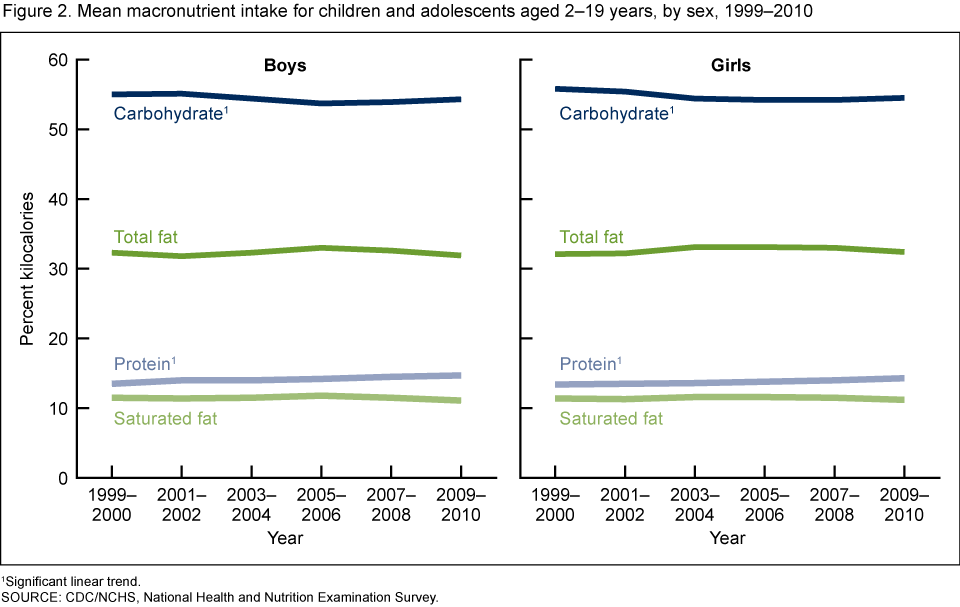
Funny, though, that the CDC report, in its "Key Findings" summary, right at the top, says "Between 1999–2000 and 2009–2010, the prevalence of obesity increased among boys, but not among girls. There was no change however, in the prevalence of obesity between 2007–2008 and 2009–2010 for either boys or girls. It is unclear if the changes in the prevalence of obesity were associated with corresponding changes in energy and macronutrient intakes in children and adolescents during this time frame."
In other words, decreases of just 150 daily calories for boys, and 76 calories for girls over a decade haven't really made a difference in the numbers of kids who are fat. (Are those losses in calories offset by more sedentary time in front of a computer?) Interestingly, intake by boys ten years ago was 1,258 calories on average per day. Now, with an average of 2,100 calories as the mean consumed, teen boys are actually taking in less than the American Heart Association says is ideal for health.
Then you look at the new study's chart about changes in what kids eat over the last decade, and, well, looks pretty consistent to me:
1Significant linear trend. SOURCE: CDC/NCHS, National Health and Nutrition Examination Survey.
Perhaps the headline should have been "Hype and Expense Countering Obesity Bring Few Results."
But our culture's enmity toward fat demands a war on "the epidemic of obesity" and continued revulsion toward those of size. A new book, What's Wrong with Fat? details all the negative implications of terms for larger people--terms of disdain rather than simply judgement-neutral descriptions. New York Times reviewer Abagail Zugler, MD. notes, "'fat' often implies the coexistence of sloth, gluttony and self-indulgence. 'Obesity' equals disease to medical professionals, while in the world of public health, it is a raging epidemic with substantial global mortality."
Except when it isn't. An impressive meta-analysis of thousands of studies recently found that overweight folks have the highest life expectancy, and those considered "grade 1" obese have the same mortality as people of normal BMI.
So why do we despise fat so much? Why is it worth millions of taxpayer dollars to combat this "epidemic"? The Stimulus alone dedicated $230 million just to anti-obesity ads. Could it have something to do with ease and grace? I'm just speculating here--Hollywood perpetrates the thin-as-beautiful model, obviously, and last week's Academy Awards highlighted to the nation the impossible standards placed before the public (with the refreshing exception of singer Adele). But it's more than that--our culture honors sports stars, ballerinas, and CEOs so accomplished they appear not to have time to eat.
Why? In our visual milieu, with TV and YouTube and HD movies from our own cameras, we're more exposed to images that contrast dynamic action with sluggishness. Thin people move easily. They gracefully alight from chairs, and energetically take on what's in their way.
Rolls of fat generally slow people down. Moving large girth requires greater strength and at times, difficult maneuvers. Communicating while out of breath detracts from content. Gov. Chris Christie, while brilliant and effective, has to deal with his weight publicly, a factor and distraction unconfronted by politicians who are more averagely shaped. Gov. Mike Huckabee, with a kindly heart, hopeful message and insightful mind, demonstrated his competence when he lost more than 100 pounds, writing about it in his book, Quit Digging Your Grave with a Knife and Fork. Some suspect that regaining part of the weight was a factor in his choice not to reprise his 2008 presidential bid in 2012.
![]() |
| Jered Fogel with his old pants at Subway |

Obese people face problems beyond the usual challenges of life simply because they present a large form. A Feb. 13 New York Times story "Two-Thirds the Man He Used to Be, and Proud of It," describes England's Paul Mason, who actually lost two-thirds of his 980-lb. body weight via gastric bypass surgery, diet and exercise (though he remains limited by excess skin). (The online version of the Times story corrects the headline error, to "One-third the Man...") Meanwhile, a USA Today story details how Jared Fogel's life now centers around his new career as symbol for fast food giant Subway, after his self-styled sandwich diet whittled him from 425 to 190 lbs. Now the company and Jered have a symbiotic relationship, and its marketing chief credits him with a third to a half of the chain's growth over 15 years.
In other words, media shows us that obesity isn't a matter of health, it's a matter of gliding with effort versus ease. Of looking good, not just staying well.
"Let's Move!" barks first lady Michelle Obama, who took her healthy-eating campaign to Mississippi this week. She took a cue from her husband's tendency to sound preacherly when she lauded that state's improvement in elementary-age obesity: "Your schools did hard work, replaced their fryers with steamers, hallelujah, and started serving more fruits and vegetables and whole grains!"
As the champion of svelte form, known for her muscular arms, the First Lady adds to the assumption that agility and litheness are superior to ample girth, no matter the amount of strength and stamina the larger person commands. Fat implies gluttony and sloth nowadays, rather than an upper-class, pampered life. Perhaps thinness, a la Les Miserables, was once considered a sign of poverty and hopelessness, but in America, to the contrary, lower socio-economic-classes experience higher levels of obesity. Now it's the stylish, well-to-do who have time for gym regimens and preparing cuisine-du-jour featuring quinoa, macadamia nuts and acai. The poor, data show, spend more time sedentary in front of televisions and computers, munching "lower quality" diets of calorie-dense prepared foods.
To combat this trend, Mrs. Obama and television cook Rachael Ray joined in a healthy food cooking duet in Mississippi, and Michelle's "The Evolution of the Mom Dance" with TV host Jimmy Fallon garnered more than 14 million YouTube views. Her moves with Serena Williams and a gym full of kids in Chicago was another occasion to put down fat and boost people whose bodies can make easy gyrations.
I don't condemn the First Lady's campaign, or even her grinding in a circle, hands clasped over her head. Exercise is beneficial and moving freely, important. I don't think it unseemly for Mrs. Obama to demonstrate that no one is above striving for fitness, and to show that dancing can be fun, rewarding exercise (I'm a Zumba fan, myself). I also understand why gazelle-like movement is seen as more beautiful and desirable than the same actions by someone generously endowed (e.g. ballet is seldom performed by overweight dancers).
My issue is with the idea that obesity can be cured by a happy afternoon bopping in the gym, revising school lunch menus and putting fresh fruit stands on inner city corners. These things do no harm, but it's a waste to invest enormous amounts of tax money in them when there's scant evidence they'll improve public health or longevity.
Obesity is far too complex a problem to insist that choosing tangerines over Tootsie Rolls will make a major difference. All the hopeful praise of (to me imperceptible) declines in childhood BMI in a few locales negates the truth of the issue, and disheartens the many people who struggle earnestly to "make healthy choices" and include exercise in their lives but find they're still not dropping pounds permanently. We need honesty about the real extent of the "problem," and less panic and hysteria about an "epidemic" whose means of transmission is just not known.
I don't condemn the First Lady's campaign, or even her grinding in a circle, hands clasped over her head. Exercise is beneficial and moving freely, important. I don't think it unseemly for Mrs. Obama to demonstrate that no one is above striving for fitness, and to show that dancing can be fun, rewarding exercise (I'm a Zumba fan, myself). I also understand why gazelle-like movement is seen as more beautiful and desirable than the same actions by someone generously endowed (e.g. ballet is seldom performed by overweight dancers).
My issue is with the idea that obesity can be cured by a happy afternoon bopping in the gym, revising school lunch menus and putting fresh fruit stands on inner city corners. These things do no harm, but it's a waste to invest enormous amounts of tax money in them when there's scant evidence they'll improve public health or longevity.
Obesity is far too complex a problem to insist that choosing tangerines over Tootsie Rolls will make a major difference. All the hopeful praise of (to me imperceptible) declines in childhood BMI in a few locales negates the truth of the issue, and disheartens the many people who struggle earnestly to "make healthy choices" and include exercise in their lives but find they're still not dropping pounds permanently. We need honesty about the real extent of the "problem," and less panic and hysteria about an "epidemic" whose means of transmission is just not known.
Tuesday, February 19, 2013
My Husband Shaved off his Mustache! (or, "I Kissed a Stranger")
Throughout the thirty years I've known my husband, he's had a mustache. It was his trademark, in fact, crawling across his face as he hosted a long-running television show, and gave thousands of speeches to huge groups across the country. He was one of those people known for his 'stache, almost his defining characteristic, because he clung to it, or it to him, way past the time even the least fashionable media icons decorated with lip fuzz.
We moved on, and he didn't, until yesterday. He called me downstairs to the bathroom and looked me in the face, grinning. Who is this person?
I should've seen it coming. I'd sweetly suggested the clean sweep to eliminate his chore of plucking out invading gray hairs. A few weeks earlier, our fashion-conscious daughter pointed out that his facial adornment had become...slightly crooked. Our son confirmed it was definitely lopsided. No, my man protested, the color of the balancing side had just turned less visible.
The fact my husband's mustache was turning gray was a big factor in his decision. Though he's staked his career on transmitting values and messages, the truth is that in our visual culture, appearance is the first factor on which people are judged. For a long time, he felt quirky or idiosyncratic by having an out-of-style facial signature. And au courant or no, he rationalized, it fit well above his thinnish lips.
He's not one for change, and that hairy strip was a reassuring constant in a dizzy world. Years ago, he reluctantly exchanged his thick eye glasses for contact lenses, at the insistence of his TV producer, who said their reflection interfered with his presentation. But his mustache? That was him.
More than once, for the Jewish holiday of Purim, when celebrants wear costumes, groups had impersonated my husband, mainly by each adding great facial swaths. The holiday is coming again this weekend, and anyone seeking to emulate him will have to rely on a toothbrush, an accessory for cleaning he often keeps neatly in his cheek.
Or maybe his clothes, known to be less than trendy. His concession to acceptability was buying a couple shirts and jeans at Costco; our daughter's expedition to Nordstrom Rack had yielded some wardrobe candidates, but he wouldn't even try them on. After all, with a closet-ful of ancient outfits (faded and threadbare makes them more comfortable), he didn't "need" any more. This is the man who went for a meeting with the President of the United States in the White House, wearing a pair of black jeans, albeit with a shirt, tie and (well-aged) sport coat. A colleague had to take him aside afterward and gently explain the proper attire for the Oval Office.
However, there's no one more up-to-date on ideas. Ask the man anything about current events, politics, film, or, for that matter, history of anyplace or anyone, and his encyclopedic mind kicks in instantly. How could he stubbornly defend a ridicule-inspiring symbol that is so, well, in-your-face?
At last he caved. And when he called me downstairs to proudly show it off, I was stunned. Between his nose and admittedly thinnish lips was...a football-field of skin. After a few moments of awe, I kissed a stranger. A very different experience, unimpeded by stray coarse hairs and a stiff fringe. With my eyes closed, it was still him. With them open, well, it sounded like him.
I'm still not used to seeing my husband's new countenance. He tends to look in the mirror and smile, frequently, assessing the image. I do think the absence of a gray slug parked over his mouth makes him look younger. Change of this type is a good thing--reminding us that physical appearance is ever-morphing, even if we don't take a scissors and Norelco to the fronts of our faces. My mom used to tell me that "beauty is only skin deep," and in this case, growing from it.
I hope my husband retains his new, sleek look. There's no need to advertise one's maturity with a mustache both wildly-unfashionable and graying. And he's got such important and worthwhile content coming out of his mouth that it hardly matters what facial decor surrounds it.
| Mustachio'd on the Jewish holiday of Purim |
I should've seen it coming. I'd sweetly suggested the clean sweep to eliminate his chore of plucking out invading gray hairs. A few weeks earlier, our fashion-conscious daughter pointed out that his facial adornment had become...slightly crooked. Our son confirmed it was definitely lopsided. No, my man protested, the color of the balancing side had just turned less visible.
The fact my husband's mustache was turning gray was a big factor in his decision. Though he's staked his career on transmitting values and messages, the truth is that in our visual culture, appearance is the first factor on which people are judged. For a long time, he felt quirky or idiosyncratic by having an out-of-style facial signature. And au courant or no, he rationalized, it fit well above his thinnish lips.
He's not one for change, and that hairy strip was a reassuring constant in a dizzy world. Years ago, he reluctantly exchanged his thick eye glasses for contact lenses, at the insistence of his TV producer, who said their reflection interfered with his presentation. But his mustache? That was him.
More than once, for the Jewish holiday of Purim, when celebrants wear costumes, groups had impersonated my husband, mainly by each adding great facial swaths. The holiday is coming again this weekend, and anyone seeking to emulate him will have to rely on a toothbrush, an accessory for cleaning he often keeps neatly in his cheek.
Or maybe his clothes, known to be less than trendy. His concession to acceptability was buying a couple shirts and jeans at Costco; our daughter's expedition to Nordstrom Rack had yielded some wardrobe candidates, but he wouldn't even try them on. After all, with a closet-ful of ancient outfits (faded and threadbare makes them more comfortable), he didn't "need" any more. This is the man who went for a meeting with the President of the United States in the White House, wearing a pair of black jeans, albeit with a shirt, tie and (well-aged) sport coat. A colleague had to take him aside afterward and gently explain the proper attire for the Oval Office.
![]() |
| The man with a naked lip |
However, there's no one more up-to-date on ideas. Ask the man anything about current events, politics, film, or, for that matter, history of anyplace or anyone, and his encyclopedic mind kicks in instantly. How could he stubbornly defend a ridicule-inspiring symbol that is so, well, in-your-face?
At last he caved. And when he called me downstairs to proudly show it off, I was stunned. Between his nose and admittedly thinnish lips was...a football-field of skin. After a few moments of awe, I kissed a stranger. A very different experience, unimpeded by stray coarse hairs and a stiff fringe. With my eyes closed, it was still him. With them open, well, it sounded like him.
I'm still not used to seeing my husband's new countenance. He tends to look in the mirror and smile, frequently, assessing the image. I do think the absence of a gray slug parked over his mouth makes him look younger. Change of this type is a good thing--reminding us that physical appearance is ever-morphing, even if we don't take a scissors and Norelco to the fronts of our faces. My mom used to tell me that "beauty is only skin deep," and in this case, growing from it.
I hope my husband retains his new, sleek look. There's no need to advertise one's maturity with a mustache both wildly-unfashionable and graying. And he's got such important and worthwhile content coming out of his mouth that it hardly matters what facial decor surrounds it.
Subscribe to:
Posts (Atom)